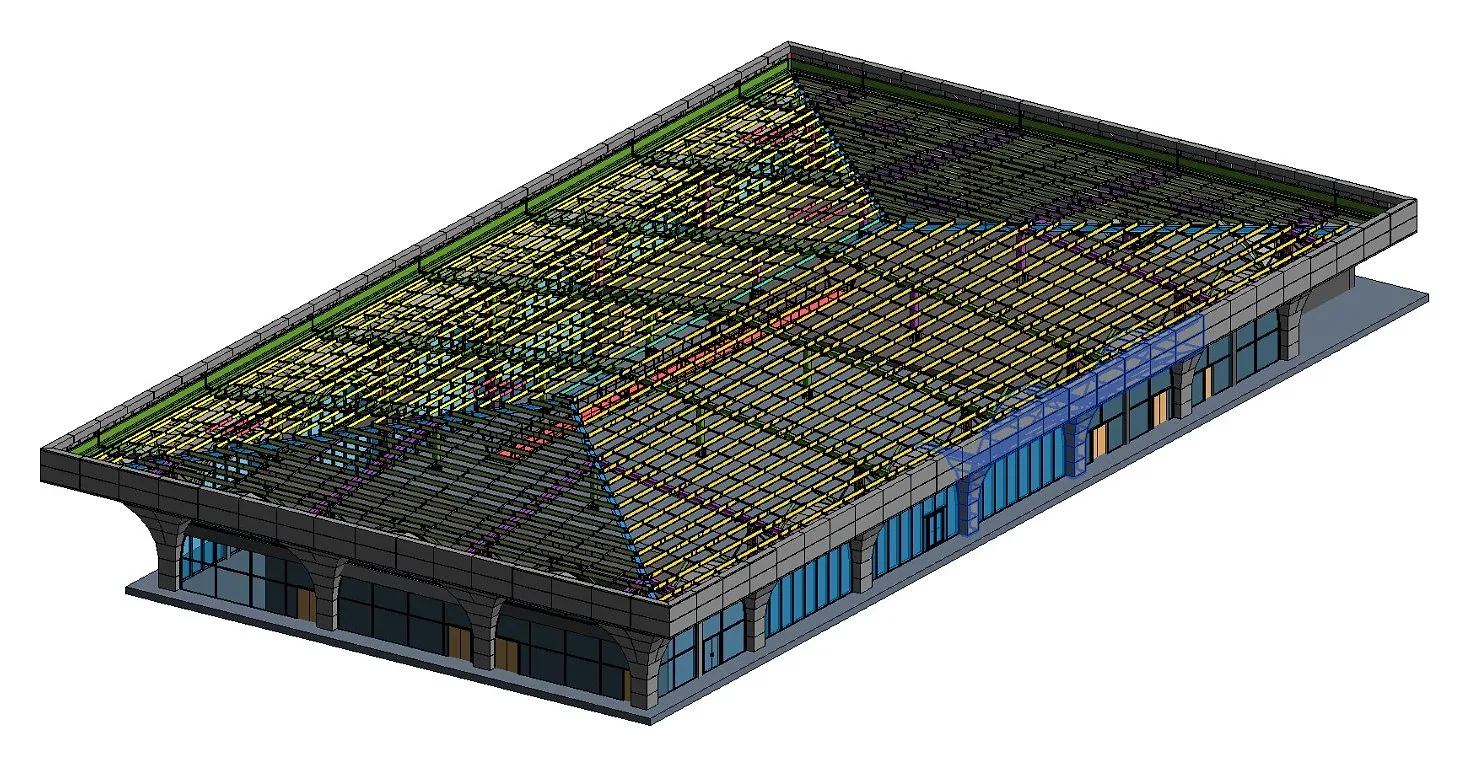
Pipes, ducts, beams and walls are drawn by different teams in different software. Finding out on site that they want the same space is the most expensive way to learn it. Clash detection finds these problems on the model, before fabrication.
The federated model
Architectural, structural and MEP models are combined into one coordination model without modifying the original files. This combined model is called the federated model. Clash tests run on it; tools such as Navisworks (NWC) are widely used for this.
Types of clash
- Hard clash: two elements occupy the same volume, for example a duct passing through a beam.
- Soft clash: elements do not touch but the required clearance is not kept, for example a pipe in the space reserved for maintenance.
- Workflow clash: a scheduling conflict, where an element cannot reach its place because of the installation order. 4D planning reveals it.
A good clash process
- Define up front which disciplines are tested against which, and the clearance tolerances.
- Run the tests and filter noise, meaning meaningless results between parts of the same system.
- Report findings with a view, a location and an owner; open formats such as BCF let you track issues independently of the model.
- Take decisions in the coordination meeting, have the responsible team revise the model, and rerun the test.
The real value is seeing which of hundreds of clashes actually need a decision, not just their count. For your coordination needs, write to us.